Getting Through the New Mexico Court Case Lookup System
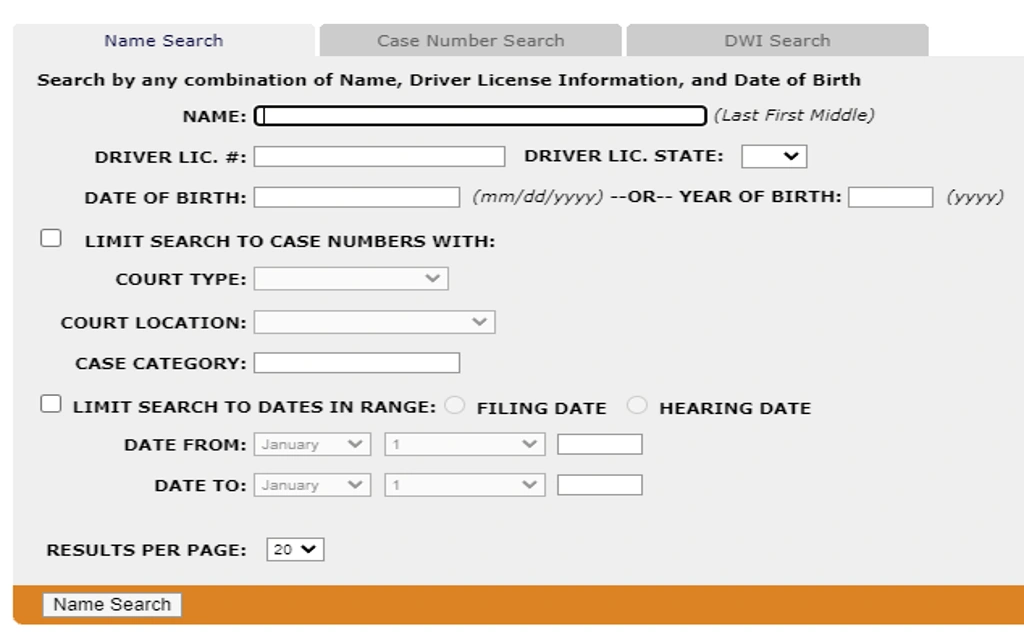
The New Mexico state court case lookup portal is the official way to pull case information online. It covers district courts, magistrate courts, and some appellate decisions across the state. The interface is functional but not intuitive, and there are enough quirks that wasting time is almost guaranteed unless you already know the layout. I spent several hours last year tracking down a docket entry for a Bernalillo County case that refused to surface under the docket number I was given. Turns out the original filer had filed under a different name variation, and the search engine does not handle aliases well at all. The primary portal lives at nimcourts.gov. You can search by party name, docket number, attorney name, or case type. The advanced search allows you to filter by court division, county, and date range. Date filters are where most people get tripped up. The system uses a broad date window by default, so a simple search for "Smith vs. Smith" will return hundreds of results spanning decades unless you tighten the range. I typically set the date window to within five years of when I expect the case to have been filed, which usually cuts the result set down from several hundred to something manageable. Docket numbers in New Mexico follow a specific format. District court cases start with a two-letter court code, followed by the year, then a sequential number. For example, a 2023 Bernalillo District Court case might look like D-DM-23-cv-01234. If you are searching by docket number and getting no results, double-check the court code and the dash placements. The search field does not ignore punctuation, so typing the number without dashes will fail. I learned this the hard way when a colleague spent twenty minutes convinced a case did not exist because he had entered the docket number with spaces instead of hyphens.
One thing the portal does not do well is handle partial name matches consistently. Searching for "John" instead of "Johnny" or vice versa can produce different result sets. There is also no fuzzy matching for misspellings. If you suspect the case was filed with a typo in the party name, you will need to search using alternate spellings manually. I keep a simple spreadsheet noting common name variations for the parties I track regularly. It saves maybe ten minutes per search, but over dozens of cases it adds up. The appeal process generates its own docket entries that sometimes appear under a separate docket number in the same case family. If you are researching a case that was appealed, you need to check both the trial docket and the appellate docket. The portal does not link them prominently, and you will easily miss the appellate filings if you only look at the original case page. The appellate docket number usually shares the same core identification but carries a different case type designation. I always search the party name with the appellate court code as a secondary check. Document images are available for most matters, but they are not indexed for full-text search. You can view a docket entry and click through to the filed document, but you cannot search within the PDFs directly through the portal. If you need to find a specific affidavit or exhibit buried in a thick filing, you will have to open each document individually. This is a known limitation and has been for years. Some county clerk offices have started offering their own supplementary search tools, but they are inconsistent across the state. Bernalillo and Santa Fe counties tend to have the more complete digital records, while rural counties may only have scanned images going back a few years.
There is a fee for certified copies of documents if you request them through the portal. The cost varies by document type and page count. Standard searches and docket lookups are free. If you need a certified copy for legal proceedings, budget roughly five dollars per page plus a certification fee that runs about two to three dollars per document. The payment goes through a third-party processing system, and occasionally the transaction fails without clear error messaging. If your payment drops, do not refresh immediately. Wait at least five minutes before checking your email or the portal account dashboard, because the record may have gone through despite the error message. I have had cases where the system charged me twice and took three business days to reconcile the refund. Mobile access works but is clunky. The site is responsive, but the forms are dense and small touch targets make it easy to misclick. I would not recommend trying to do serious research on a phone. The desktop experience is also not polished, but it is usable if you take your time and pay attention to what you are clicking. If you are tracking multiple cases, consider creating a free account on the portal. The account feature lets you save searches and set up basic alerts for new docket entries. The alert system is not real-time — notifications tend to come in batches, often once or twice daily. During active litigation, this delay matters. I learned that the hard way when I missed a critical motion filing for six hours because the alert had not yet pushed through. For time-sensitive matters, I still check the docket manually at least once a day rather than relying on the automated notification.
Get the Full Details

The system occasionally goes down for maintenance, usually on Sunday nights between midnight and 4 AM. It is announced on the court website, but you should verify the status yourself if you are on a tight deadline. I have shown up to file something urgently only to find the portal was still down because the maintenance window had been extended without updating the notice board. The magistrate court division tends to have fewer outages than the district court search backend, probably because the traffic volume is lower. One advanced trick most people do not know: you can sometimes find related cases by searching the attorney's name rather than the party name. If a particular law firm handles a lot of similar cases in your area, pulling up their docket can reveal patterns or connected filings that the party-name search would miss. This is especially useful in family law and civil rights cases where the same attorneys appear across multiple disputes. It is not a guarantee of finding anything useful, but it is a strategy I use when a straight party search returns nothing promising. Bottom line, the New Mexico court case lookup portal gets the job done if you understand its quirks and work around them. It is not fast, it is not elegant, and it will frustrate you at least once during any serious research session. Plan for that and you will save yourself a lot of unnecessary digging.