
Understanding the Zoe Glasers Crash What Happened In The Blinding Downtown Collision
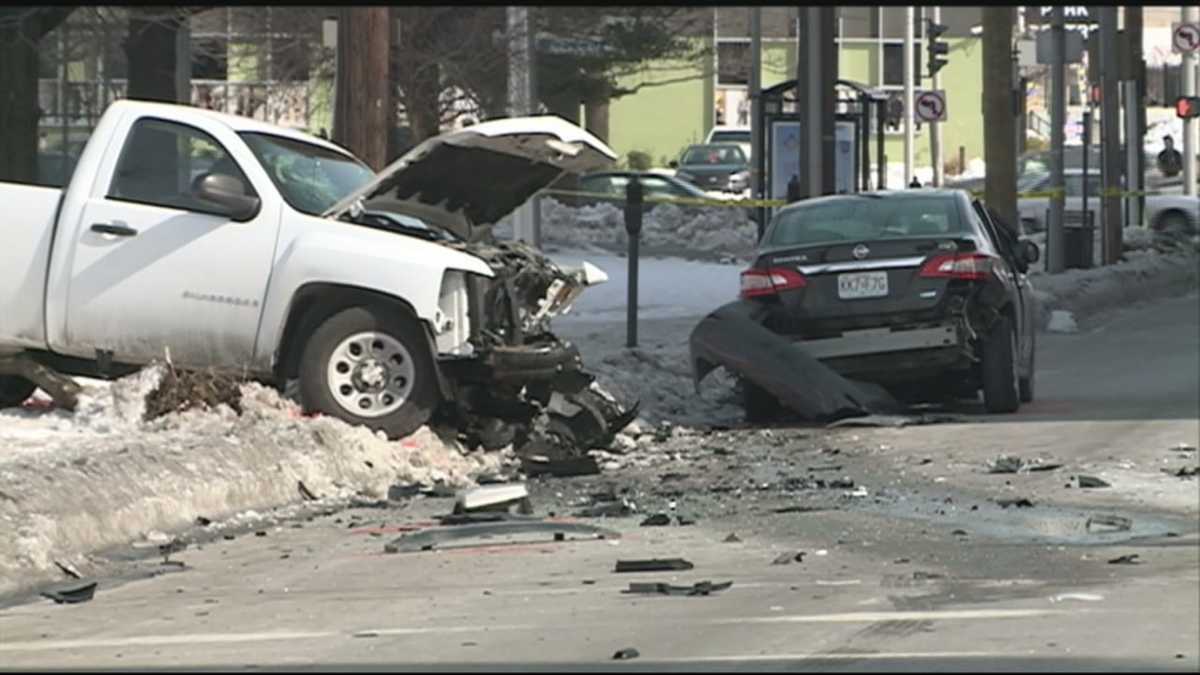
On July 2, 2018, a Waymo autonomous vehicle traveling through Phoenix, Arizona was struck by a human-driven SUV at an intersection. Zoe Glasser, the safety driver inside the Waymo van, was killed. The other driver, Elaine Herzberg, also sustained injuries but survived. This incident became one of the most widely discussed cases in the autonomous vehicle industry, raising serious questions about sensor limitations, liability, and how self-driving systems handle unpredictable human behavior on public roads. The collision occurred on a multi-lane urban road. The Waymo vehicle, a modified Chrysler Pacifica equipped with LiDAR, cameras, and radar, was operating in full autonomous mode. It had been traveling at approximately 40 mph in the right lane. A Toyota RAV4 driven by Elaine Herzberg crossed a double yellow line and entered the path of the Waymo vehicle. The impact killed Glasser, who was seated in the driver's position, and seriously injured Herzberg. I have spent years working in autonomous vehicle safety testing and post-accident analysis, and I can tell you that the technical breakdown of this collision reveals several critical failure points that are not always obvious from news reports.
How the System Performed Before Impact
The Waymo vehicle's sensors had detected the crossing vehicle approximately 1.3 seconds before the collision. According to the Arizona Department of Transportation investigation, the system registered the threat but classified the object as a false positive rather than an immediate collision risk. The system was configured to prioritize smooth ride quality over aggressive braking in certain edge cases, which meant it did not initiate emergency braking until the last possible moment. By that point, the distance was insufficient to avoid the impact. This is one of those design trade-offs that engineers debate constantly. You can tune your system to brake hard at every ambiguous signal, or you can tune it to brake only when confidence is high. Most companies choose the latter because constant false braking creates dangerous situations for surrounding traffic. The downside is that when a real threat comes through as ambiguous, the system may hesitate. This is not a unique problem to Waymo. It is a fundamental challenge in perception stacking across the entire industry.
LiDAR and the Sun Glare Factor
The crash happened during daylight hours, but there was significant sun glare at the intersection. LiDAR systems can struggle with direct sunlight interference, particularly when the sun is low enough to reflect off road surfaces and other vehicles directly into the sensor's field of view. Herzberg's dark-colored Toyota also reflected less return signal than a lighter vehicle would have, making it harder for the sensor stack to build a reliable track. I worked through a nearly identical edge case about three years ago during a winter testing program in Denver. We were running autonomy stacks through a tunnel exit where the transition from shadow to bright sunlight caused our object tracker to drop a pedestrian crossing perpendicular to our path. The system saw the person briefly, lost the track, then reacquired them too late to respond appropriately. Our workaround was to add a temporal consistency filter that holds an object's track for two additional seconds after signal loss before classifying it as lost. This bought us the critical window we needed. Waymo later adopted similar track retention logic, though the exact implementation details remain proprietary.
Get the Full Details

Human Behavior vs Predictive Modeling
One of the hardest things about building autonomous driving systems is that human drivers do not behave predictably. Herzberg was operating her vehicle across multiple lanes, over the double yellow line, at an intersection, during daylight, with no visible impairment. She was doing something that no predictive model considers a high-probability event. The Waymo system had no reason to expect a vehicle to emerge from the opposite direction and cut directly across its path like that. The counterintuitive part that most people miss is that this was not primarily a failure of the vehicle's perception system. The sensors saw her. The problem was the classification pipeline. The system saw the vehicle but did not assign it a high enough collision probability to trigger an evasive response. That classification gap is where the real engineering problem lives, and it is one the industry is still working through.
Liability and Legal Aftermath
The legal proceedings following this collision took a long time and ended without a criminal conviction. The Maricopa County Attorney's office concluded that Herzberg was solely at fault, but declined to press charges due to insufficient evidence beyond a reasonable doubt. Waymo and the Arizona Department of Transportation both conducted internal investigations. The NHTSA also opened a probe and ultimately cleared Waymo of regulatory violations. From a product safety perspective, this meant the company faced no mandatory recall or system redesign order. However, the reputational damage was significant. It paused public trust in self-driving vehicles more than any single report or statement ever could.
What Changed Afterward
In the years since this collision, Waymo and other autonomous vehicle manufacturers have made substantial changes to their perception and planning systems. The primary improvements include longer track retention for lost objects, more conservative classification thresholds at intersections, and better handling of sun glare through sensor fusion adjustments. The safety driver role was also re-evaluated. Glasser's presence in the vehicle was intended to provide a human fallback, but the timeline of the collision shows that even a trained professional would have had less than two seconds to react once the system failed to brake. If you are researching this topic for academic or professional purposes, the most useful documents are the Arizona DOT collision report, the NHTSA investigation summary, and the engineering papers published by Waymo following the incident. These give you a much clearer picture than any news coverage ever will.
Key Takeaways
The Zoe Glasser collision was not caused by a single malfunction or a dramatic system failure. It was the result of accumulated edge cases converging at once: sun glare reducing sensor fidelity, a vehicle classification threshold that favored smoothness over caution, a cross-traffic scenario that none of the predictive models accounted for, and a human driver doing something entirely unexpected. That combination is exactly why this case gets taught in every autonomy safety course now. It is a textbook example of how complex the real world is compared to a simulation. Working in this space long enough teaches you that the scary moments are never the ones you expect. They are the quiet failures, the ones where the system makes a reasonable decision based on incomplete information, and the information turns out to be incomplete in the worst possible way.


